The divorce ended. The fear for your kids didn't.
You can't control what happens at the other house. This is about what you can control: what your child comes home to, and whether they feel safe enough to tell you the truth.
- Know which changes in your child need action, and which are part of adjusting
- Answer the stories they bring home without putting them in the middle
- Work through every hard exchange on paper, so you see it coming next time

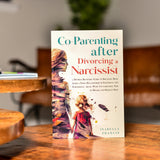
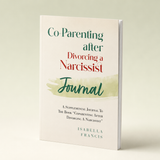
Co-Parenting After Divorcing a Narcissist
Three fears parents bring to this book
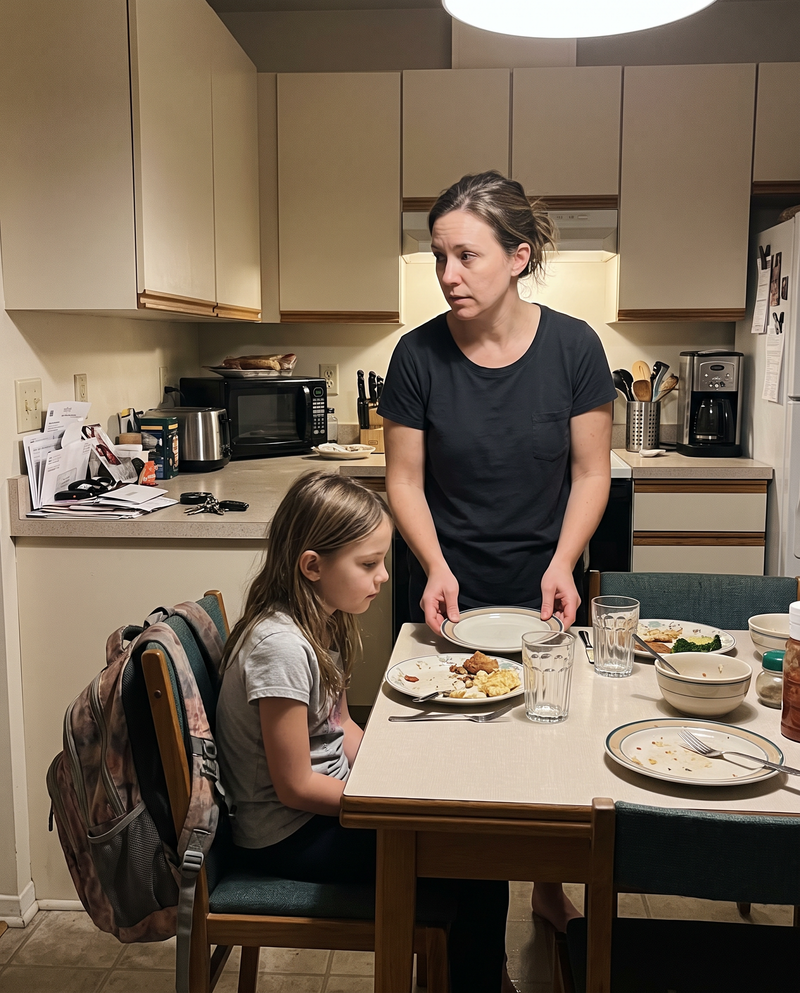
They come home different.
Quieter at dinner. A question about something you never said. Words that sound older than they are. The book helps you listen first, work out what's real, and stay the parent they can talk to.
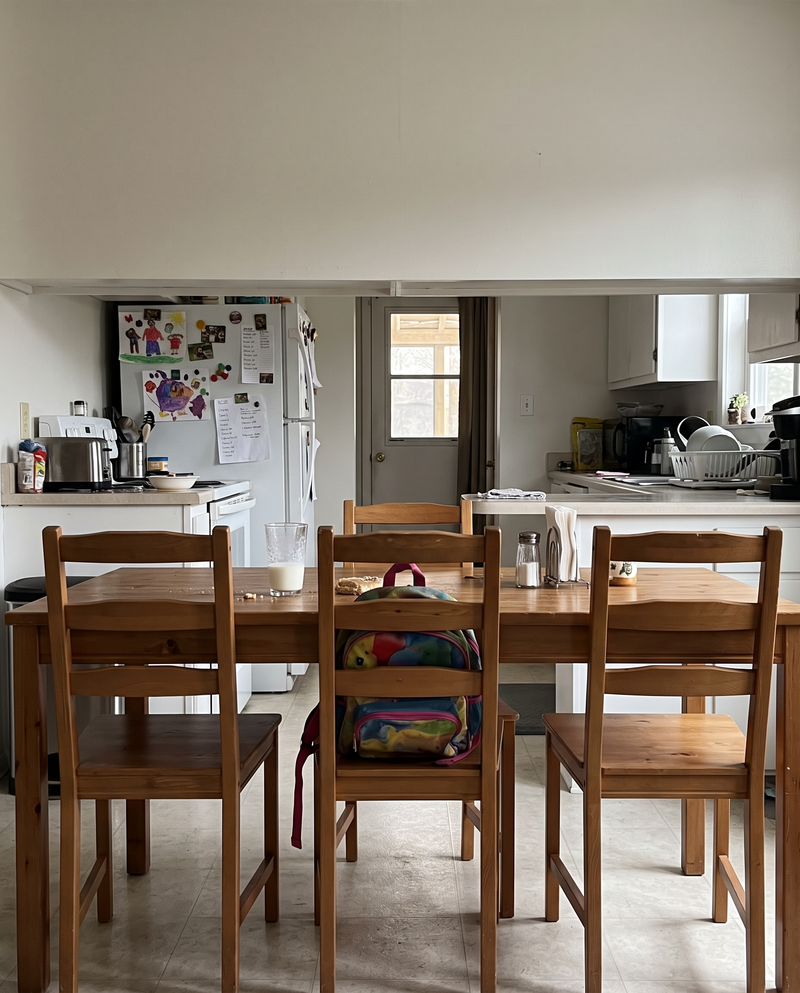
They feel they have to choose.
A stomachache on exchange day. Two different kids in two different houses. The book explains loyalty conflict, what it usually means, and how to take the weight of choosing off them.

They learn the wrong thing about love.
Kids remember how the adults handled it. The book is honest that this is a real risk, and practical about the example you can still set from your house.

You've been guarding the wrong door.
Most parents in this spot spend everything on the other house. Reading every message twice. Correcting every story the kids bring back. Bracing for every exchange.
It makes sense. But it's the one part you can't control, and your child feels that fight even when you think they don't.
What shapes them most is the part you can control: a home where they don't have to pick a side, and a parent they can tell anything to.

Isabella doesn't soften this part.
"In essence, your child may never learn how to have a healthy, adult relationship because they never saw one. I know this sounds scary, but it just means that you need to sit up and take charge of your interactions with your ex as well as your relationship with your children."
"Narcissistic abuse naturally leaves some sort of fear behind in you. What if the next person you meet is also a narcissist? What if you were victimized because you're all messed up inside, and the narc is drawn to that? What if your children are scarred for life because you got a divorce?"
And then, where it's earned, she lets you breathe.
"A child who is experiencing a loyalty conflict may throw tantrums, have headaches, or cry whenever they have to go to the other parent. It's usually no cause for alarm because they tend to feel better shortly after they get to the other parent's place."
Some of these will be true.
- You read every message from them twice, looking for what they really mean.
- Your child came back from a weekend and repeated something about you that isn't true.
- Exchange day starts with a stomachache. Theirs or yours.
- You've caught yourself asking your child questions you know you shouldn't.
- You kept the peace "for the kids," and it didn't keep anything.
- You lie awake wondering what they're learning about love from all of this.
What the book gives you for those moments
Read the signs
Which changes in your child point to something serious, and which are part of adjusting to two homes.
Say the right thing
How to talk to them about the divorce, and what to do when they feel caught between you.
Hold your ground
Boundaries that protect you and your child while you still have to deal with your ex.
Recognize alienation
What it looks like, how it differs from loyalty conflict, and when to bring in a therapist or attorney.
Know when to stop trying
Why co-parenting may be impossible with a narcissistic ex, and how parallel parenting works instead.
Rebuild the bond
How to strengthen your relationship with your child after the split, and help them grow resilient.

The book tells you what to do. The journal is where you actually do it.
Fear lives in the moment right after an exchange, when you're replaying every word. That's when you need somewhere to put it.
- Read it. Understand what's happening, for you and for your child.
- Write it. Work through each hard exchange on paper instead of in your head at 2 a.m.
- See it coming. Patterns show up on the page, so the next exchange stops catching you off guard.
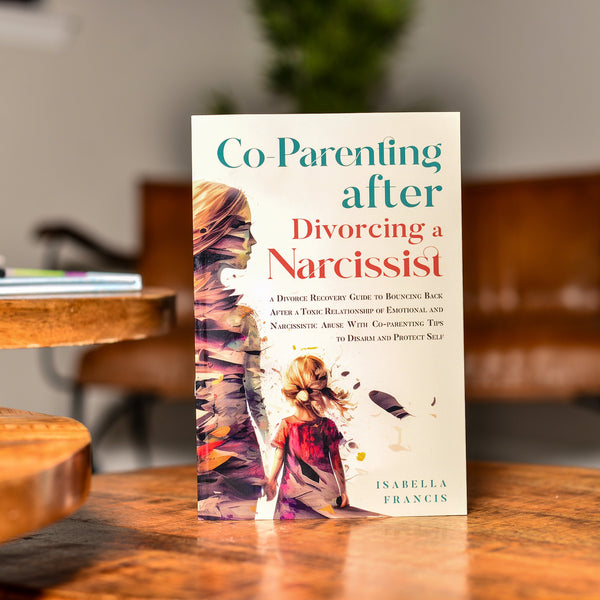
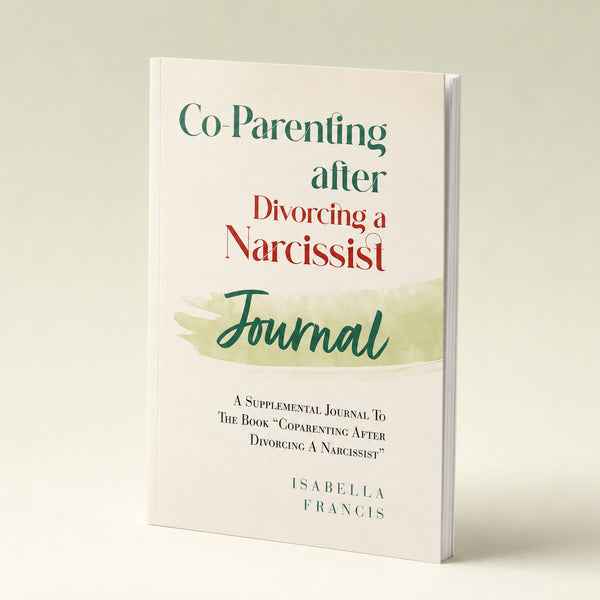
What this book won't do
- It won't change your ex. Isabella is blunt that they won't play nice, even for the children's sake.
- It won't replace a therapist or an attorney. If your child is being harmed, the book's advice is to limit contact and talk to your attorney about custody.
- It won't tell you your child is fine, or that they aren't. It helps you see more clearly, so you can decide what to do next.
Isabella Francis
Isabella spent two years in a toxic relationship before she got out. She lives in California with her husband and three daughters. She wrote this book for parents who left and still have to share their children with the person they left.
What readers said
"I love how sometimes we don't even realize that we are dealing with a narcissist, so we don't know how they act. But in this book, you get tests and red flags of proper behavior of a narcissist to help you best prepare and understand what and how to find common ground for the children."
"Whether divorcing a diagnosed narcissist or a particularly difficult partner, Isabella Francis provides readers with important tools to navigate a situation that can wear down even the strongest individuals."
"Having a lot of experience in divorce court I can say that this book has a lot of great information. If you are going through a divorce with a narcissist, then I highly recommend."
Read it. Write it. See it coming.
Book + Journal
The book, plus the companion journal for working through each hard exchange as it happens.
The book
Paperback, 202 pages. Everything on this page is in it.
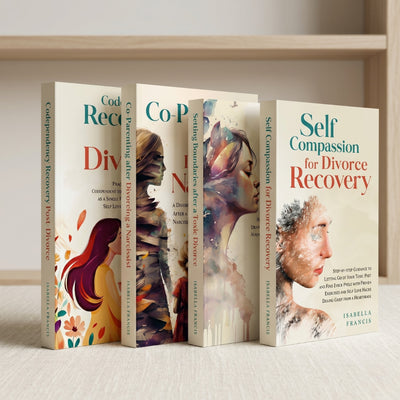
Complete Recovery Set
All four of Isabella's books, for when you're ready to work on your own recovery too.
What parents ask before they buy
Will this help if my ex won't cooperate at all?
That's who it's written for. Isabella says plainly that co-parenting may be impossible with a narcissistic ex, and walks you through parallel parenting as the alternative (pp. 152-153).
Can it tell me whether my child is being alienated?
No book can. It explains what alienation looks like and how it differs from loyalty conflict, which are easy to confuse, and when to bring in a therapist or your attorney.
My child cries before every exchange. Should I be worried?
Not necessarily. The book notes this is common with loyalty conflict and that kids usually settle soon after they arrive (p. 151). It also covers the signs that do need attention. If you believe your child is unsafe, contact your attorney or local authorities.
Why get the journal too?
The book shows you what to do. The journal is where you work through each exchange as it happens, so you see the patterns instead of reliving them. The book still stands on its own if you'd rather start there.
My kids are teenagers. Does it still apply?
Yes. Chapter Four has a section on teenagers specifically, alongside the questions kids commonly ask and answers to give.
Is it only for mothers?
No. The book refers to the other parent as "they" throughout and is written for any parent.
How fast does it ship?
Ships in 3 to 5 business days.